Financing remains a significant obstacle, with the International Energy Agency finding that capital costs for renewable power and battery projects in emerging economies are at least twice those in advanced economies.
The breakdown of COP31 climate talks has exposed a deepening rift between the Global South and the West over the transition to cleaner energy. According to the United Nations Environment Programme, developing countries require $305 billion annually by 2035 to adapt to climate change, yet international public flows only reached $28.2-31.7 billion in 2024.
Financing remains a significant obstacle, with the International Energy Agency finding that capital costs for renewable power and battery projects in emerging economies are at least twice those in advanced economies. The removal of a quantified financing target from the revised negotiating text at COP31 underscored the difficulty of securing commitments that match developing countries' growing climate needs.
Beyond international financing commitments, domestic infrastructure planning presents another challenge. In India, for example, renewable-energy developers have incurred significant losses due to transmission constraints, with nearly one-third of recently commissioned renewable capacity relying on temporary grid access. Coordinated investment in transmission infrastructure is equally important if additional renewable capacity is to deliver its intended benefits.
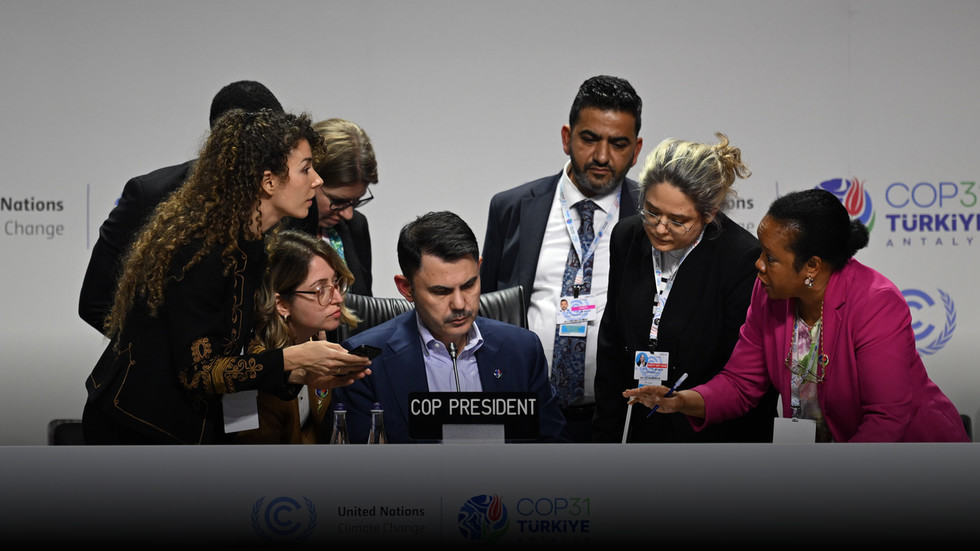
The failure to reach an agreement at COP31 has competing interpretations, with countries demanding stronger fossil fuel language viewing the proposed agreement as inadequate for addressing climate change, and developing economies emphasizing the importance of equity, finance, and national flexibility. Despite the breakdown, the negotiations did deliver progress on several specific climate decisions, and attention now turns to COP32 in Ethiopia.
The unresolved questions that have persisted through successive climate summits, including the commitment to transition away from fossil fuels and the $300 billion annual climate finance goal for developing countries by 2035, will need to be addressed at COP32. For countries like India, the test lies in whether expanding clean energy capacity can deliver reliable electricity while reducing dependence on imported petroleum.